Updated 19 November 2026
In short: Human rights are the basic freedoms and protections every person holds because they are human, set out for the world in the Universal Declaration of Human Rights in 1948. Their purpose is to protect dignity and equality against abuse by states and others. Violations range from violence and imprisonment to discrimination in work, family life and schooling. For decades LGBT people were left out of that framework in practice; in June 2011 the UN Human Rights Council passed resolution 17/19, its first on sexual orientation and gender identity.
This site began life as a campaign blog about LGBT rights in the United States between 2007 and 2011. Those battles, over marriage, hate crimes, military service and workplace protection, are easier to follow once the wider idea behind them is clear. This guide explains what human rights are for, what a violation looks like, and how the rights of lesbian, gay, bisexual and transgender people came to be treated as human rights rather than a special case.
It also replaces several shorter articles that used to live on this site about the kinds of human rights and why they matter; their old addresses now point here.
What human rights are
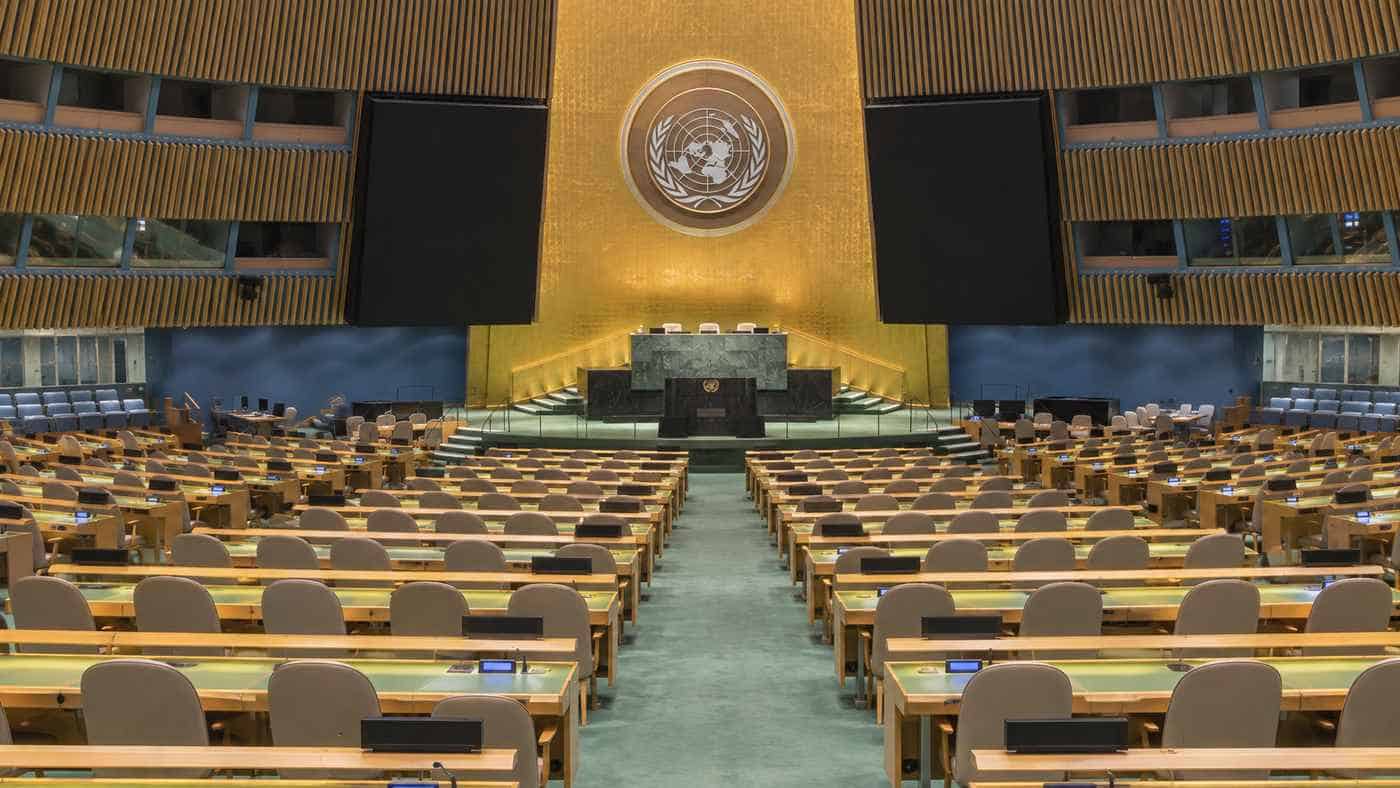
Human rights are claims that every person can make simply by being human. They do not depend on nationality, wealth, religion or any other status. The modern list was written after the Second World War. The Universal Declaration of Human Rights was proclaimed by the UN General Assembly in Paris on 10 December 1948, as “a common standard of achievements for all peoples and all nations”. According to the UN’s drafting history, it passed by 48 votes to none, with 8 abstentions.
Its 30 articles cover two broad families of rights. Civil and political rights protect people from the state: the right to life, freedom from torture, fair trials, free speech, freedom of religion and the right to vote. Economic, social and cultural rights ask the state to provide or protect: education, work on fair terms, health, an adequate standard of living. In 1966 these were turned into two binding treaties, the International Covenant on Civil and Political Rights and the International Covenant on Economic, Social and Cultural Rights.
Article 2 is the hinge for everything on this site. It says everyone is entitled to the rights in the declaration “without distinction of any kind, such as race, colour, sex, language, religion, political or other opinion, national or social origin, property, birth or other status.” Sexual orientation and gender identity are not named. Much of the later argument has been about whether “other status” includes them.
What human rights are for
The purposes of human rights can be put in four plain statements.
- Dignity: every person counts and cannot be treated as a thing.
- Equality: the same rules apply to everyone, and differences in treatment need a real justification.
- Limits on power: governments, and in some cases employers, schools and other institutions, may not do whatever a majority wants to a minority.
- Accountability: when rights are broken there should be a way to name it, stop it and put it right.
The equality purpose explains why LGBT campaigns in the United States so often went to court. A legislature can reflect majority views; a constitution’s equal protection clause is meant to check them. The Iowa Supreme Court made exactly this point in 2009, as our guide to the Iowa marriage ruling explains.

What a human rights violation looks like
A violation happens when a right is denied or broken by someone with a duty to respect it. For LGBT people, the record of violations falls into a few recurring types:
- Violence: assaults and killings motivated by who the victim is. In the US this led to the 2009 Matthew Shepard and James Byrd Jr. Hate Crimes Prevention Act.
- Criminal law: laws that make same-sex relations a crime. Dozens of countries still have them.
- Exclusion from institutions: bans on military service, such as the US policy known as “Don’t Ask, Don’t Tell”, or on marriage.
- Discrimination at work, in housing and in services: being fired, refused a home or turned away for being gay or transgender. See our guide to gender identity laws.
- Exclusion in schools: students punished or shut out of school life, covered in our article on LGBT students and the law.
Trafficking and forced labour are among the gravest violations in any region, and no one may be forced into a relationship or into sex work. Thailand, which voted for resolution 17/19, has long debated how to protect people working in its large nightlife economy; licensing and closing-time rules for bars and clubs are summarised in Party Thailand’s guide to Thailand’s alcohol laws and bar hours, and the same principle of consent applies to every venue.
How LGBT rights entered the UN system
For most of the twentieth century the UN said little about sexual orientation. Change came through individual cases and expert work before it reached the political bodies. In 1994 the UN Human Rights Committee, which oversees the civil and political rights covenant, found in Toonen v. Australia that Tasmania’s ban on sex between men breached the right to privacy. In 2006 a group of experts drafted the Yogyakarta Principles, applying existing human rights law to sexual orientation and gender identity.
The political breakthrough came in Geneva on 17 June 2011. The UN Human Rights Council adopted resolution 17/19 on human rights, sexual orientation and gender identity by 23 votes to 19, with 3 abstentions. The text expressed “grave concern at acts of violence and discrimination, in all regions of the world, committed against individuals because of their sexual orientation and gender identity”. It asked the High Commissioner for Human Rights for a study of discriminatory laws and violence. The United States, the United Kingdom, Brazil, Japan and Thailand were among those voting in favour.
The UN Human Rights Office calls it the first wide-ranging resolution on the subject by any UN intergovernmental body. The study came out in December 2011, and in March 2012 the Council held the first formal intergovernmental debate on the issue.
The international picture in 2009 to 2011
The years covered by this archive were a turning point abroad as well as at home. In 2009 a bill in Uganda proposed the death penalty for “aggravated homosexuality”, drawing condemnation from governments and religious leaders worldwide. In December 2009 US Secretary of State Hillary Clinton raised it in a speech on human rights, and in 2010 the US Senate Foreign Relations Committee approved a resolution opposing it. In December 2011 Clinton told the UN in Geneva that “gay rights are human rights, and human rights are gay rights”.
The Ugandan bill did not pass in its 2009 form; a later version was struck down on procedural grounds in 2014, and a new law was enacted in 2023. The pattern, progress in some countries and backlash in others, has continued since.

How the US campaigns fit the framework
The American fights of the period were national, but each one maps onto a basic right.
- Security of the person: the federal hate crimes law of 2009.
- Equal treatment by the state: marriage rulings in Iowa, the District of Columbia’s marriage law, and the long fight over the Defense of Marriage Act.
- Equal access to public service: the repeal of the military ban in 2010 and 2011.
- Fair work: state gender identity laws and, in 2020, the Supreme Court’s ruling in Bostock v. Clayton County.
Key takeaways
- Human rights belong to every person and were set out for the world in the Universal Declaration of Human Rights on 10 December 1948.
- Their purposes are dignity, equality, limits on power and accountability.
- Violations against LGBT people include violence, criminal laws, exclusion from institutions and discrimination at work and school.
- The UN Human Rights Council’s resolution 17/19 of 17 June 2011 was the first UN resolution on sexual orientation and gender identity.
- Each major US campaign of 2007 to 2011 can be read as a claim to an existing human right.
Common questions
What are the main kinds of human rights?
Civil and political rights, such as free speech, fair trials and freedom from torture, and economic, social and cultural rights, such as education, health and fair work. Both families are set out in the 1948 declaration and the two 1966 covenants.
Why do human rights matter?
They set a floor below which no government or majority may push any person. They give people a shared language to name abuse and a set of legal tools to challenge it.
Are LGBT rights human rights?
The UN treats them as the same rights applied without discrimination. Resolution 17/19 in 2011 and later UN reports describe violence and discrimination based on sexual orientation and gender identity as human rights violations.
Is the Universal Declaration of Human Rights legally binding?
Not as a treaty. It is a declaration of standards. Its content was made binding for ratifying states by the 1966 covenants, and many of its principles are now treated as customary international law.
What was the first UN resolution on sexual orientation?
Human Rights Council resolution 17/19, adopted in Geneva on 17 June 2011 by 23 votes to 19 with 3 abstentions.
How we wrote this: This guide uses UN primary documents for dates and vote counts and standard reference works for the wider history. It is a plain-language summary, not legal advice. Last checked November 2026.
Sources
- United Nations: Universal Declaration of Human Rights
- UN Library: Drafting history of the Declaration, General Assembly vote
- UN Human Rights Council: Resolution 17/19 (2011)
- UN Digital Library: Resolution 17/19 record and vote
- OHCHR: International human rights law and sexual orientation fact sheet
- OHCHR: The Universal Declaration of Human Rights
Leave a Reply